
Bone Grafting in Glenpool, OK
Build a Strong Foundation for Dental Implants and Long-Term Oral Health

.svg)
Restore What’s Missing Below the Surface
If you've lost a tooth or have worn dentures for years, chances are you've also lost bone density in your jaw. This bone loss can compromise your ability to receive dental implants or affect the shape and structure of your face.
At Glenpool Dental Group, we offer safe, effective bone grafting procedures to restore your jaw’s strength and volume — making you a better candidate for dental implants and ensuring long-term success with your restoration.
What Is Bone Grafting?
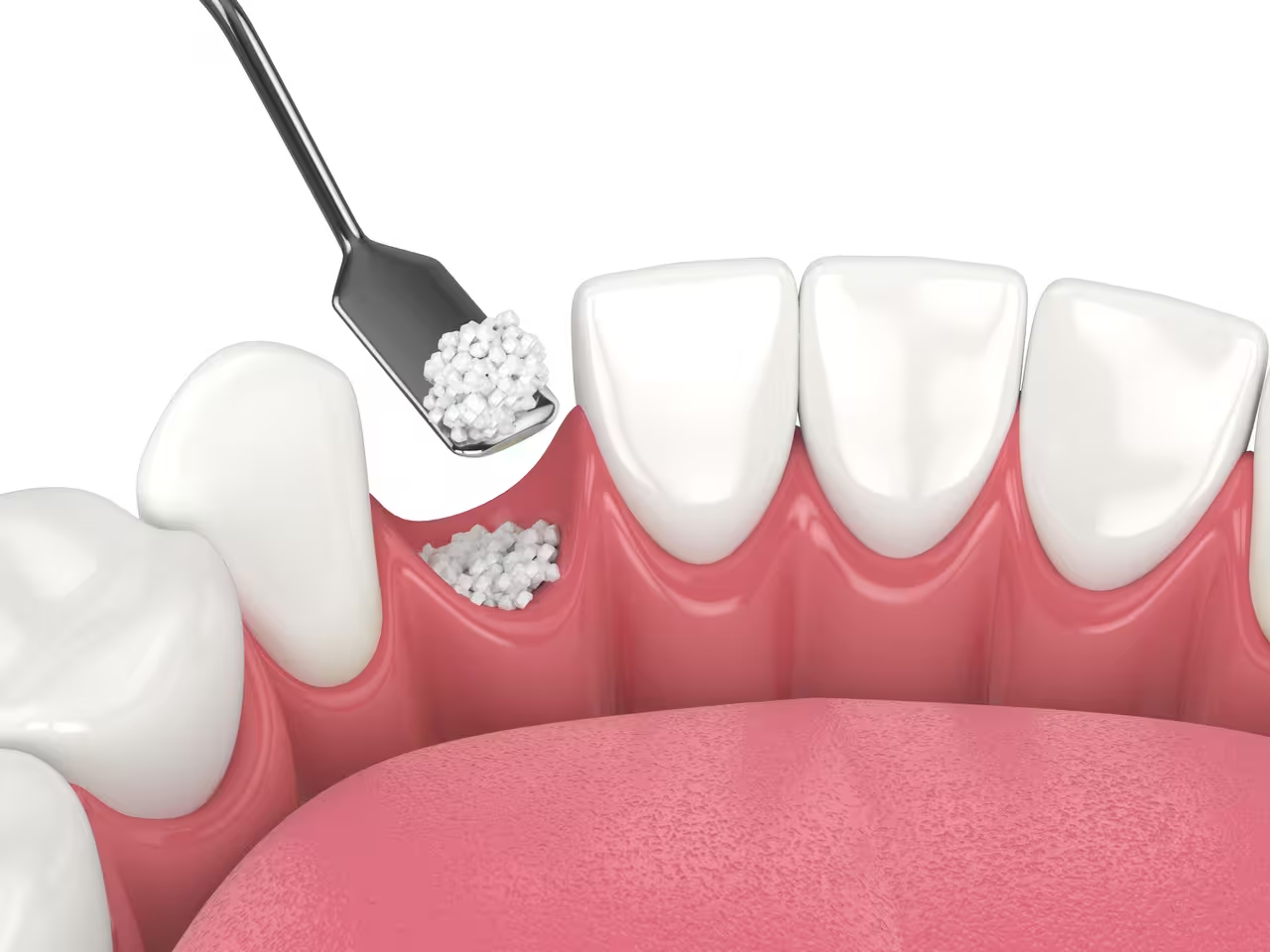
Bone grafting is a surgical procedure that rebuilds or replaces bone in the jaw where volume has been lost due to:
- Tooth loss
- Periodontal (gum) disease
- Infection or trauma
- Long-term denture wear
During the procedure, bone material is placed in the deficient area, encouraging your body to grow new bone cells and regenerate lost structure. Over time, this creates a stable foundation for future restorations like dental implants.
Why You Might Need a Bone Graft
Bone grafting may be recommended if:
- You’ve been missing teeth for an extended period
- You’ve experienced bone shrinkage after an extraction
- You’re not a candidate for implants due to low bone volume
- You’re planning on an All-on-4 implant or implant-supported denture
- Gum disease or infection has caused bone deterioration
Without enough bone, implant posts may not be stable or successful. Bone grafting helps you get back on track.
Types of Bone Grafting Procedures
At Glenpool Dental Group, we provide several types of bone grafts based on your specific needs:
- Socket Preservation – Placed immediately after a tooth extraction to preserve the bone
- Ridge Augmentation – Rebuilds the natural contour of your jaw for implant or denture placement
- Sinus Lift – Adds bone to the upper jaw below the sinus, often necessary for upper molar implants
- Minor Grafts – Small areas of grafting to support a single implant site
We use biocompatible grafting materials, including donor tissue or synthetic substitutes, to promote safe and natural regeneration.
What to Expect During Bone Grafting
Most grafting procedures are performed in our office under local anesthesia, with optional sedation for comfort. Here’s what the process typically involves:
- Consultation & Imaging: We take digital X-rays or 3D scans to assess the volume and density of your bone.
- Grafting Procedure: Bone material is placed in the target area, and a protective membrane may be used to guide healing.
- Healing & Integration: Over the next 3–6 months, the graft fuses with your natural bone to rebuild a stable foundation.
- Next Steps: Once healed, you’ll be ready for implant placement or additional restorative treatment.
We’ll provide personalized aftercare instructions and check in regularly throughout the healing process.
Cost, Insurance & Payment Options
Bone grafting is often a necessary step in implant care and may be partially covered by dental insurance when tied to restorative treatment. Glenpool Dental Group makes your care accessible with:
- Acceptance of Delta Dental, GEHA, and other major insurers
- Flexible financing options via Cherry, CareCredit, and Alphaeon
- Savings through our membership plan for uninsured patients
We’ll walk you through costs and coverage before scheduling any procedures.
Bone Grafting for Patients in Glenpool and Tulsa County
If bone loss is standing in the way of your dental goals, we're here to help. Patients across Glenpool, Kiefer, Mounds, Liberty, and greater Tulsa County trust Glenpool Dental Group for safe, effective bone grafting care — delivered with comfort and compassion.
FAQs About Bone Grafting
Question text goes here
Answer text goes here
Is bone grafting painful?
Most patients experience mild discomfort for a few days after the procedure, similar to an extraction. We use local anesthesia and offer sedation for a comfortable experience.
How long does it take to heal?
Healing time typically ranges from 3 to 6 months, depending on the size of the graft and your body’s healing response.
Can I get a dental implant immediately after a bone graft?
Sometimes. In minor cases or with socket preservation, implants can be placed the same day. In most cases, healing is required before implant placement.
Will the bone graft material be from my own body?
Not necessarily. We use a variety of safe, biocompatible materials — including donor tissue and synthetic grafts — depending on your needs and preferences.
Is bone grafting always necessary before implants?
Not always. Many patients have sufficient bone volume without grafting, but if bone loss is present, a graft may be essential for implant success.
Still have questions?
Build a Better Foundation for Your Future Smile
If you’ve been told you don’t have enough bone for implants — or you simply want to explore your options — bone grafting could be the first step toward a stronger, healthier smile.